
Family Car Rental in Jumeirah Dubai: Best Cars, Prices, Documents & Family Rules
Published: 24 August 2026 · Last updated: 24 August 2026
Reviewed by Jumeirah Car Rental
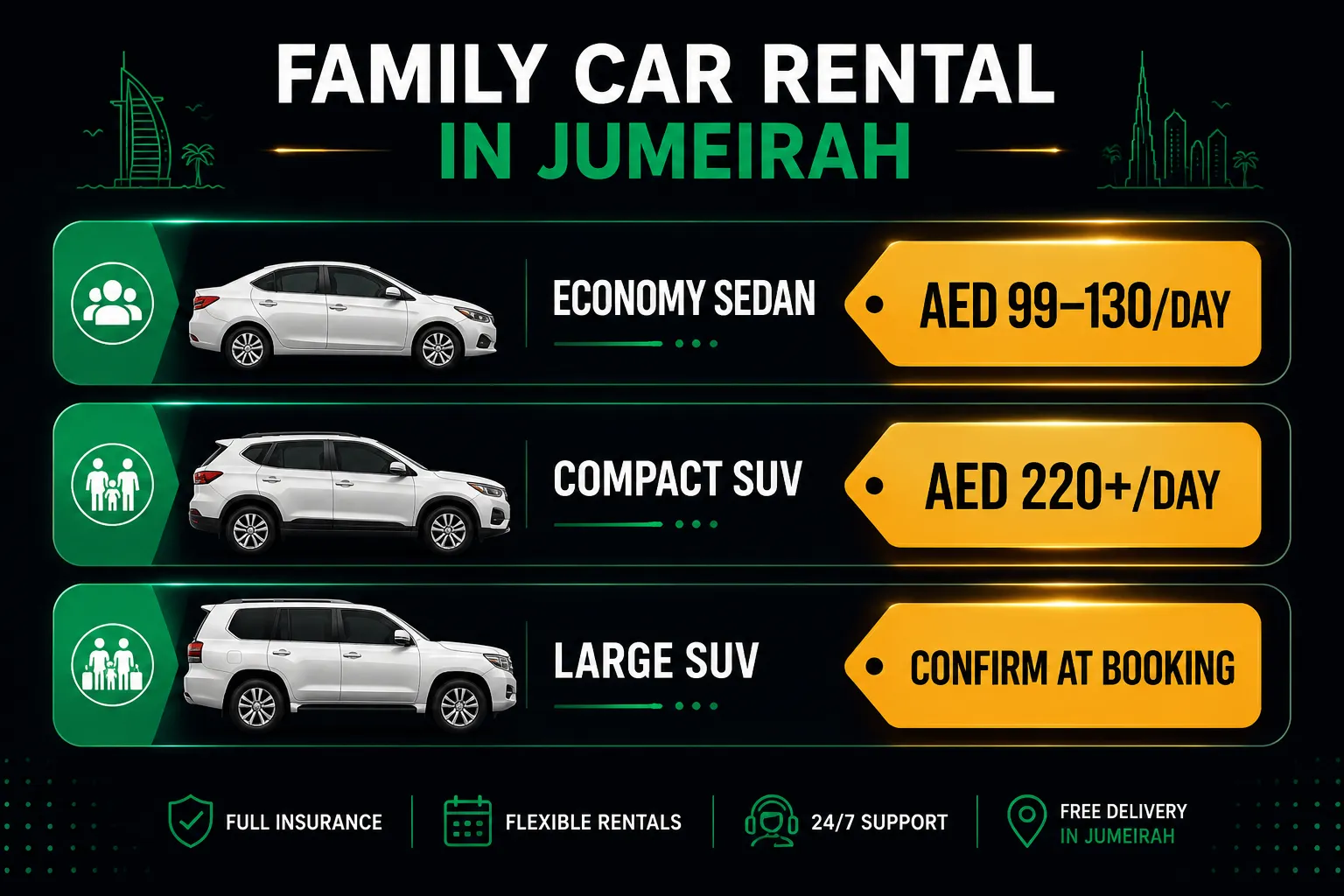
Hiring a family car in Jumeirah Dubai can start from approximately AED 99–130 per day for an economy sedan. For families that need more space, compact SUVs and practical 7-seat vehicles generally start from AED 220+ per day, subject to vehicle availability, rental dates, duration, and chosen insurance cover.
The right rental vehicle depends less on the label “family car” and more on your real requirements: how many people are travelling, how much luggage you have, whether you are carrying a stroller or child seats, and whether your plans are limited to Dubai or include road trips to Hatta, Abu Dhabi, or Al Ain.
Jumeirah Car Rental provides unlimited mileage and free delivery and collection in Jumeirah, Umm Suqeim, Al Sufouh, and selected nearby locations. Salik tolls, fuel, traffic fines, and optional services are charged separately.
Family car rental prices in Jumeirah Dubai
There is no single fixed rate for a family rental car in Dubai. Your final booking price can vary according to the car category, travel season, number of rental days, delivery location, and services such as child seats, additional drivers, or enhanced insurance.
Instead of comparing only the advertised daily rate, ask for the complete payable price, including VAT, insurance, delivery, and requested extras.
| Car category | Suitable for | Seats | Indicative price from |
|---|---|---|---|
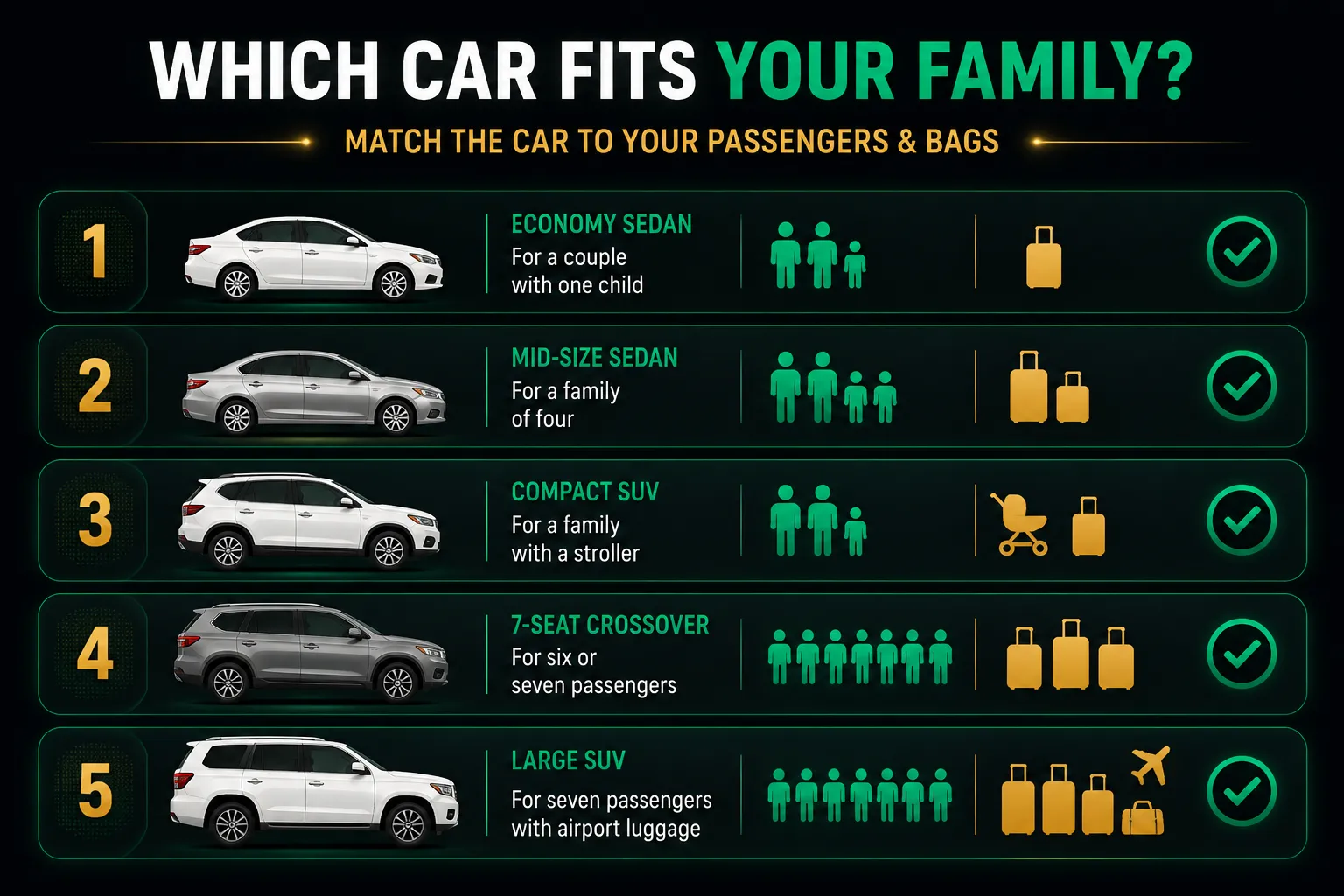
| Economy sedan | Couple with one child, local city travel | 5 | AED 99–130/day |
| Mid-size sedan | Family of four carrying luggage | 5 | Above economy rate |
| Compact SUV | Families using a stroller or child seat | 5 | AED 220+/day |
| 7-seat crossover | Six or seven passengers with light bags | 7 | Above compact SUV |
| Large SUV | Seven travellers with substantial luggage | 7 | Confirm at booking |
Rates are indicative and may change based on season, model availability, vehicle specification, and booking duration. Request a final written quote before confirming.
Why do family car rental rates change in Dubai?
- Rental length: Weekly and monthly rentals commonly have a lower daily cost than short-term bookings.
- Car size and category: SUVs and 7-seat cars cost more than sedans, but may avoid the need for separate taxis or an additional vehicle.
- High-demand periods: December to March, Eid holidays, and school breaks can increase demand for SUVs and larger family vehicles.
- Extras and protection plans: Child seats, second-driver registration, and excess-reduction insurance can increase the final booking total.
If you are travelling to Jumeirah during school holidays or winter, reserve early. Family SUVs, child seats, and airport-delivery slots may be limited during busy periods.
Which car should a family rent in Jumeirah?
The best choice is not necessarily the largest SUV available. It is the car that comfortably handles your passengers, bags, child seats, and expected driving routes without leaving you paying for unnecessary capacity.
| Travel plan | Recommended car | Reason |
|---|---|---|
| Two adults and one child, Dubai city use | Economy sedan: Elentra, Toyota Yaris | Easy parking, lower fuel consumption, practical daily transport |
| Two adults, two children, 2–3 suitcases | Mid-size sedan: Mercedes Benz GLB – I10Grand | More comfortable rear seating and useful boot capacity |
| Family of four or five with a stroller | Compact SUV: Mitsubishi ASX or similar | Easier access for child seats and a more usable boot |
| Six or seven passengers with a few bags | 7-seat crossover: CADILLAC ESCLADE or similar | Useful third-row seating for short family journeys |
| Seven passengers plus airport luggage | Large SUV: Nissan Patrol, LandRover | More realistic capacity for both people and bags |
Be careful with compact 7-seaters
A compact 7-seat vehicle may legally and physically seat seven passengers, but its luggage capacity becomes very limited once the third row is upright.
For example, with all seats in use in a Land Rover vehicle, the rear boot generally accommodates only a few small bags. It is not designed for seven large suitcases, a stroller, and hand luggage.
For families landing at DXB with multiple large suitcases and seven passengers, a large SUV is usually the practical solution—or arrange separate luggage transport.
Sedan or SUV for family travel in Dubai?
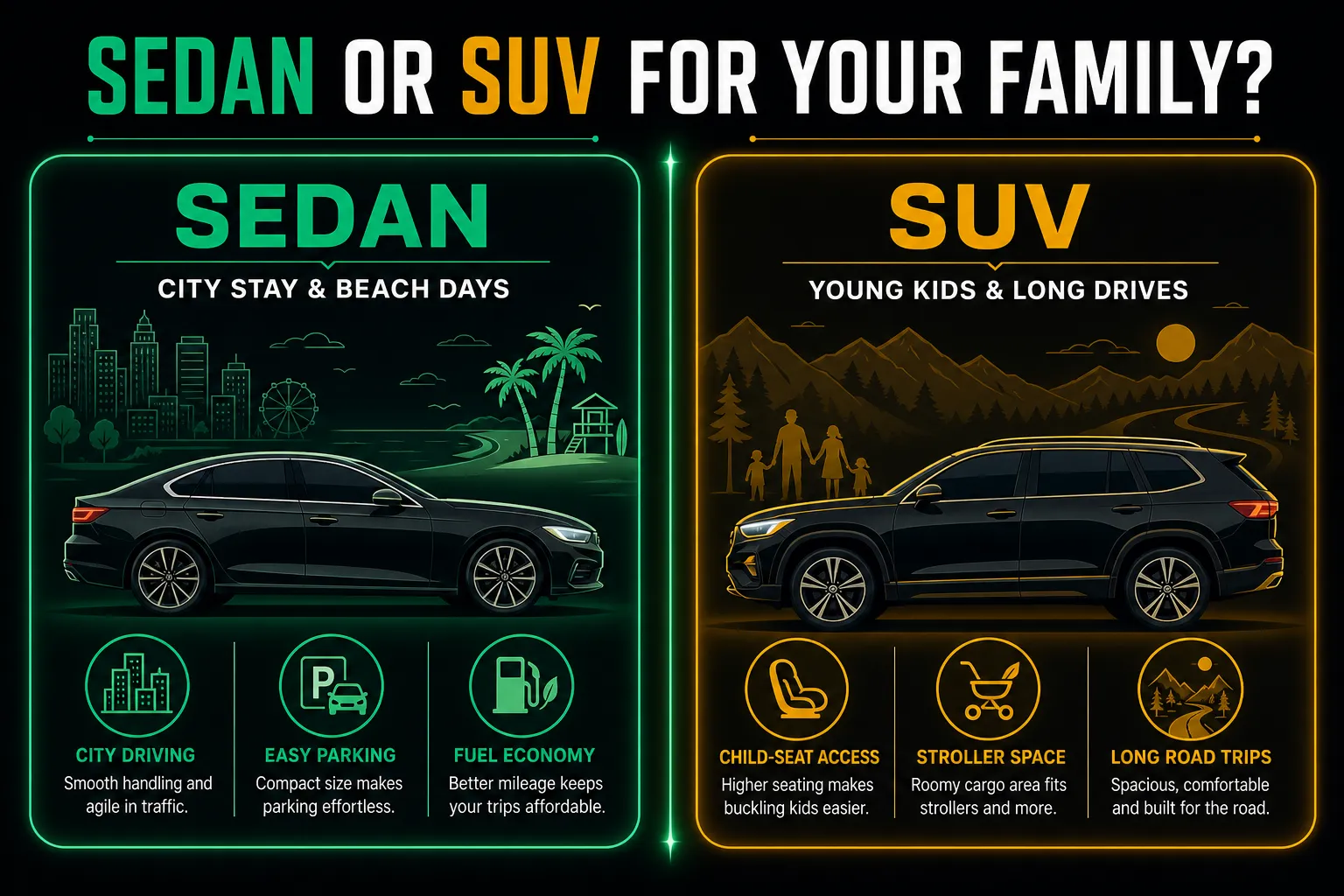
Both vehicle types can suit a family holiday. Your itinerary and luggage setup should decide the choice.
A sedan is ideal for city-based family trips
For a family of three or four staying around Jumeirah, Umm Suqeim, Dubai Marina, Downtown Dubai, Business Bay, or Palm Jumeirah, a sedan is often the more cost-effective option.
A Corolla-sized sedan can offer:
- Better fuel economy for a one- or two-week rental
- Easier parking around malls, hotels, and beach areas
- Comfortable driving on Sheikh Zayed Road
- Enough boot space for many families of four
For beach visits, restaurants, shopping centres, hotel transfers, and sightseeing, a sedan can be entirely sufficient.
An SUV is more convenient for young children and longer drives
An SUV may be the easier option when travelling with younger children, a pushchair, multiple bags, or two child seats.
An SUV can be especially useful for paved-road journeys to:
- Hatta
- Al Qudra
- Jebel Jais
- Abu Dhabi
- Al Ain
- Desert resorts accessed by regular roads
Remember: renting an SUV does not automatically permit off-road use. Many standard rental insurance policies exclude damage from sand driving, dune bashing, and underbody incidents.
Family-friendly features to request
- ISOFIX child-seat anchors
- Reversing camera or parking sensors
- Rear air-conditioning vents
- ABS and standard safety equipment
- Appropriate boot capacity for your luggage and stroller
Documents required to rent a family car in Jumeirah Dubai
The required paperwork differs for UAE residents and international visitors.
UAE residents
UAE residents will normally need:
- A valid Emirates ID
- A valid UAE driving licence
- A credit card in the principal driver’s name for the refundable security deposit
Tourists and visitors
Visitors generally need to provide:
- Passport
- UAE entry visa or visa-on-arrival stamp
- Original driving licence from their home country
- International Driving Permit (IDP), if applicable
- Credit card in the primary driver’s name
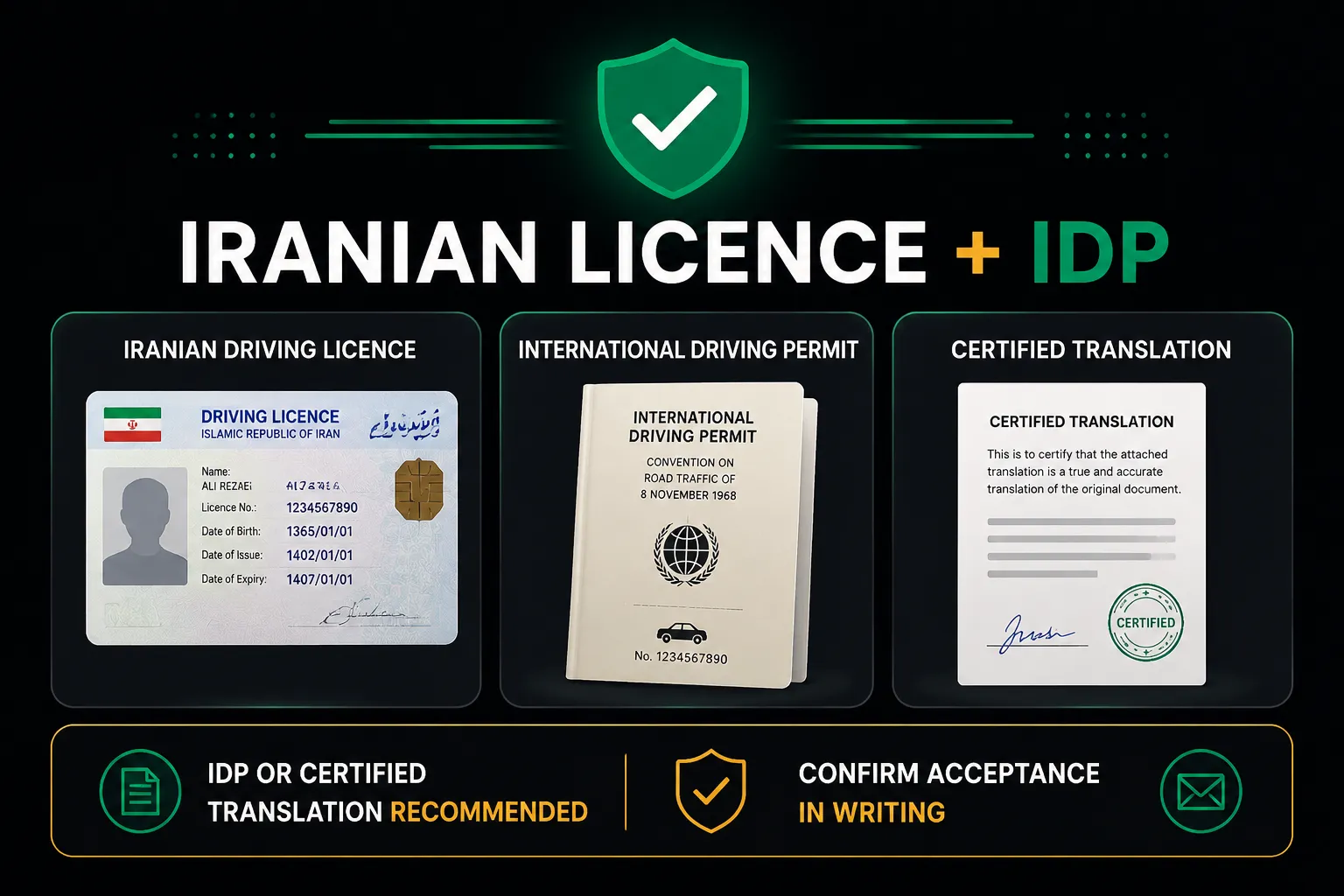
Do Iranian tourists need an IDP to rent a car in Dubai?
For travellers holding an Iranian driving licence, carrying an International Driving Permit or official translation is strongly recommended.
Because Iranian licences are not issued in Latin script, a rental supplier or insurer may request an IDP or a certified translation together with the original licence. Acceptance may differ according to the rental company, insurer, and exact licence format.
The safest solution is to arrange an IDP before travelling and obtain written confirmation from Jumeirah Car Rental that your licence documentation is accepted.
Before departure, review current information from the UAE Government portal and the Dubai RTA. Document issues at collection can seriously disrupt family travel arrangements, particularly where airport arrival, hotel check-in, and child transport depend on the rental car.
Minimum driver age
- 21 years old for standard sedans and economy vehicles
- 25 years old or above for many premium, luxury, or large SUV categories
What is included in the family rental price?
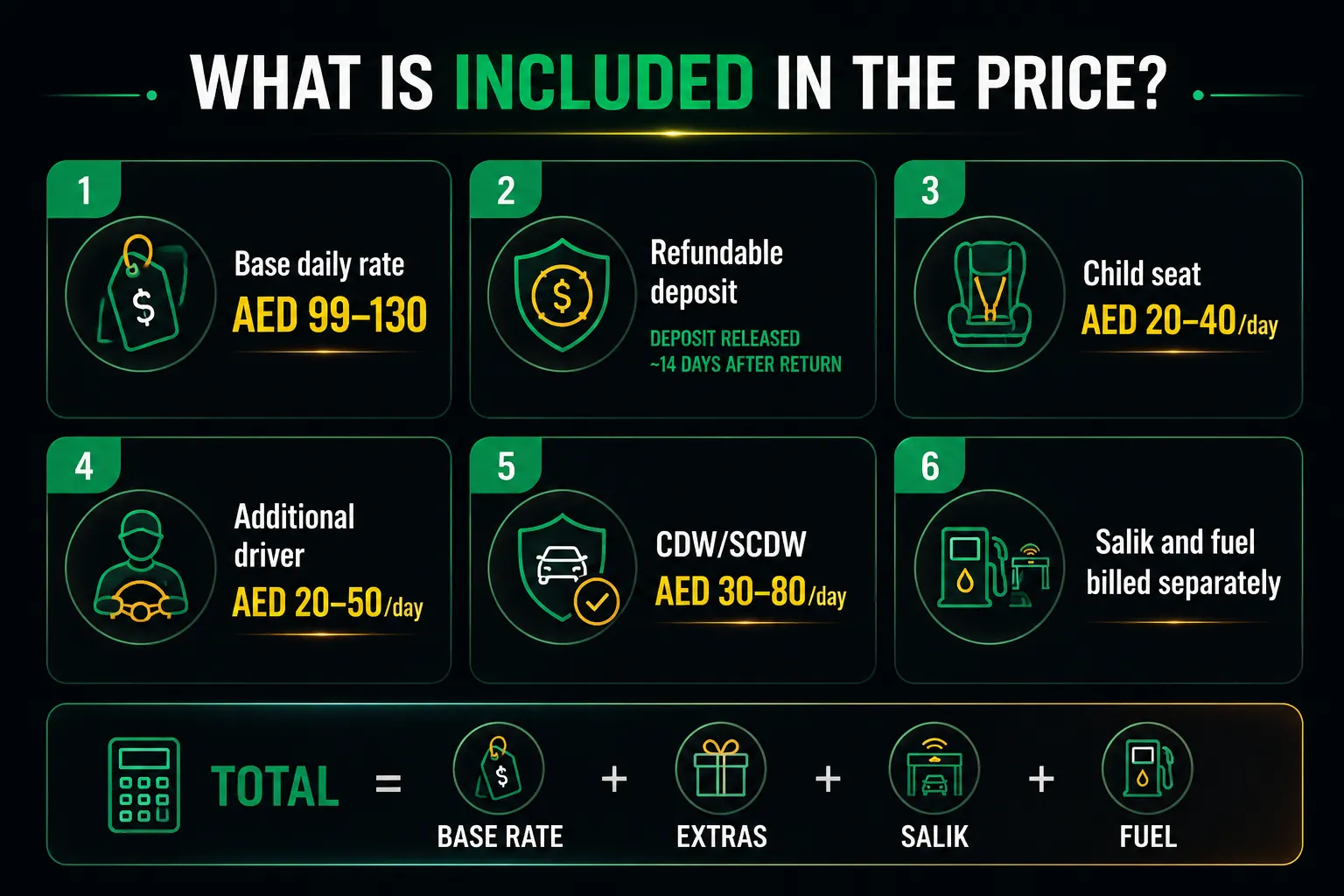
An attractive base rate does not always represent the full amount you will pay. Request an all-in daily quotation that states what is included and excluded.
| Cost item | How it works | Typical amount |
|---|---|---|
| Daily vehicle rental | Base hire cost for your selected category | From AED 99–130/day for economy |
| Refundable security deposit | Card hold for potential fines, tolls, or damage | Varies by vehicle |
| Child seat | Charged daily or for the entire rental | AED 20–40/day |
| Additional driver | Must be listed on the rental agreement | AED 20–50/day |
| CDW or SCDW | Can reduce financial liability for vehicle damage | AED 30–80/day |
| Salik tolls | Added for each toll-gate crossing | Based on current Salik schedule |
| Fuel | Vehicle is generally returned at the same level | Approx. AED 3.60/L as of Aug 2026 |
| Traffic fines | Charged back to the renter | Fine amount plus possible admin fee |
| Delivery outside covered zones | May apply beyond free-delivery areas | Confirm in advance |
Total rental cost = daily hire rate + optional insurance + child seat + additional driver + Salik + fuel + traffic fines. The deposit is generally refundable when there are no pending fines, toll charges, or damage-related claims.
Why is a security deposit held?
The security deposit is usually blocked temporarily on the main driver’s credit card. It helps cover costs that may appear after the return date, including Salik tolls and traffic fines.
- What deposit amount will be held on my credit card?
- When will the deposit hold be released after vehicle return?
A release time of around 14 days is common, although actual timing depends on the rental company, bank, outstanding road charges, and card provider.
Basic insurance, CDW, and excess explained
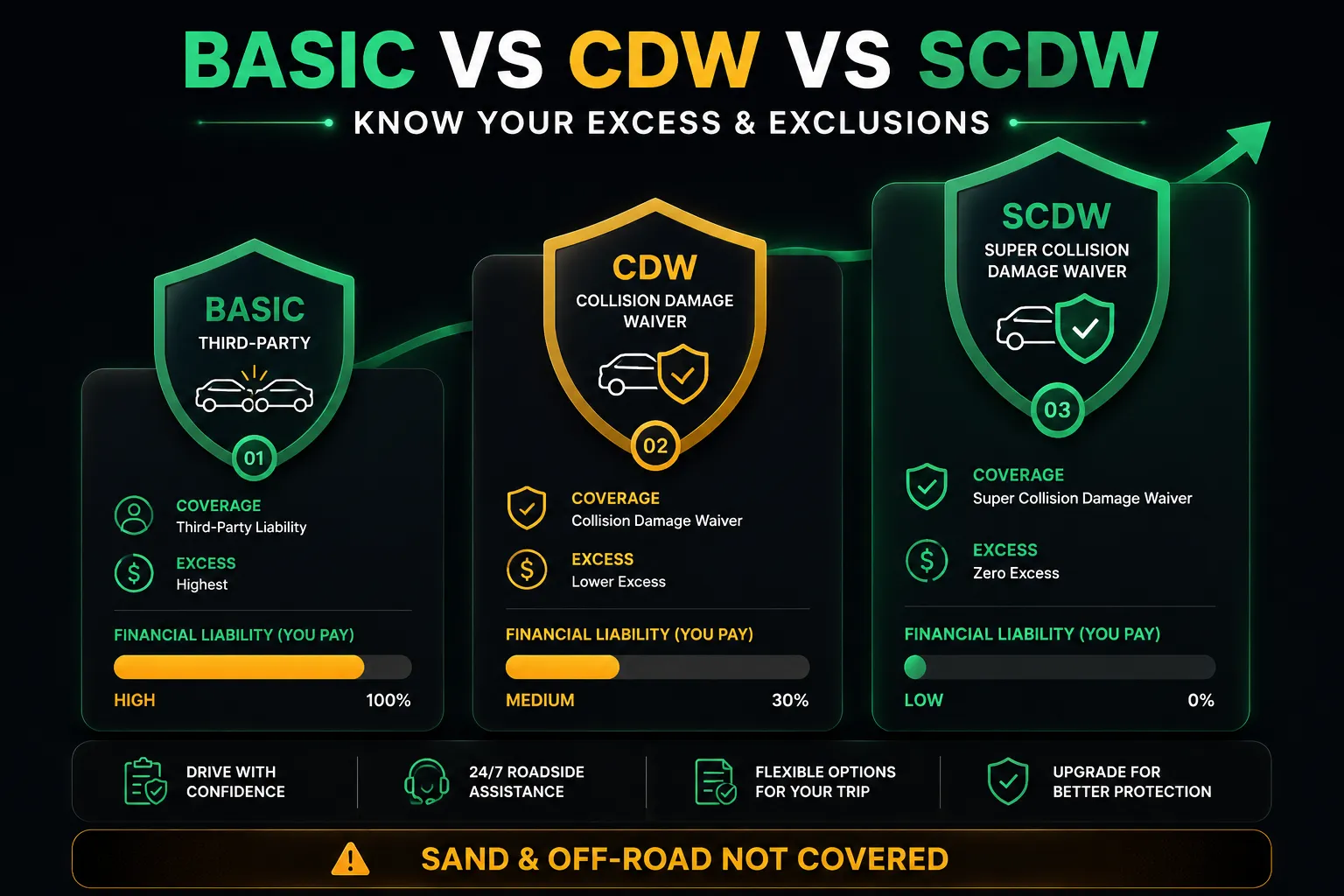
Rental vehicles normally include mandatory third-party insurance. This protects against liability for damage or injury caused to others, but it may not remove your financial responsibility for damage to the rental vehicle itself.
Basic insurance cover
Basic cover typically includes third-party liability. If the rented vehicle is damaged, you may still be responsible for a substantial excess amount.
Collision Damage Waiver (CDW)
CDW lowers your financial exposure if the vehicle is damaged. However, it does not necessarily remove liability entirely. The remaining amount you could be asked to pay is known as the insurance excess.
Super Collision Damage Waiver (SCDW)
SCDW may reduce the excess further and, depending on the agreement, can sometimes reduce it to zero. It costs more per day but may be worth considering for a longer trip or a higher-value SUV rental.
Typical exclusions to check
- Tyres
- Windscreen or other glass damage
- Underbody damage
- Interior damage
- Sand driving and off-road incidents
- Damage caused by someone not registered as a driver