Jumeirah, Dubai 2026: The Honest Guide to Living, Visiting & Investing
Published: 8 September 2026 · Last updated: 8 September 2026
Reviewed by Jumeirah Car Rental
An unvarnished look at Dubai’s original coastal residential district — its sub-districts, beaches, ownership rules, real investment numbers, and how it compares with Palm Jumeirah.
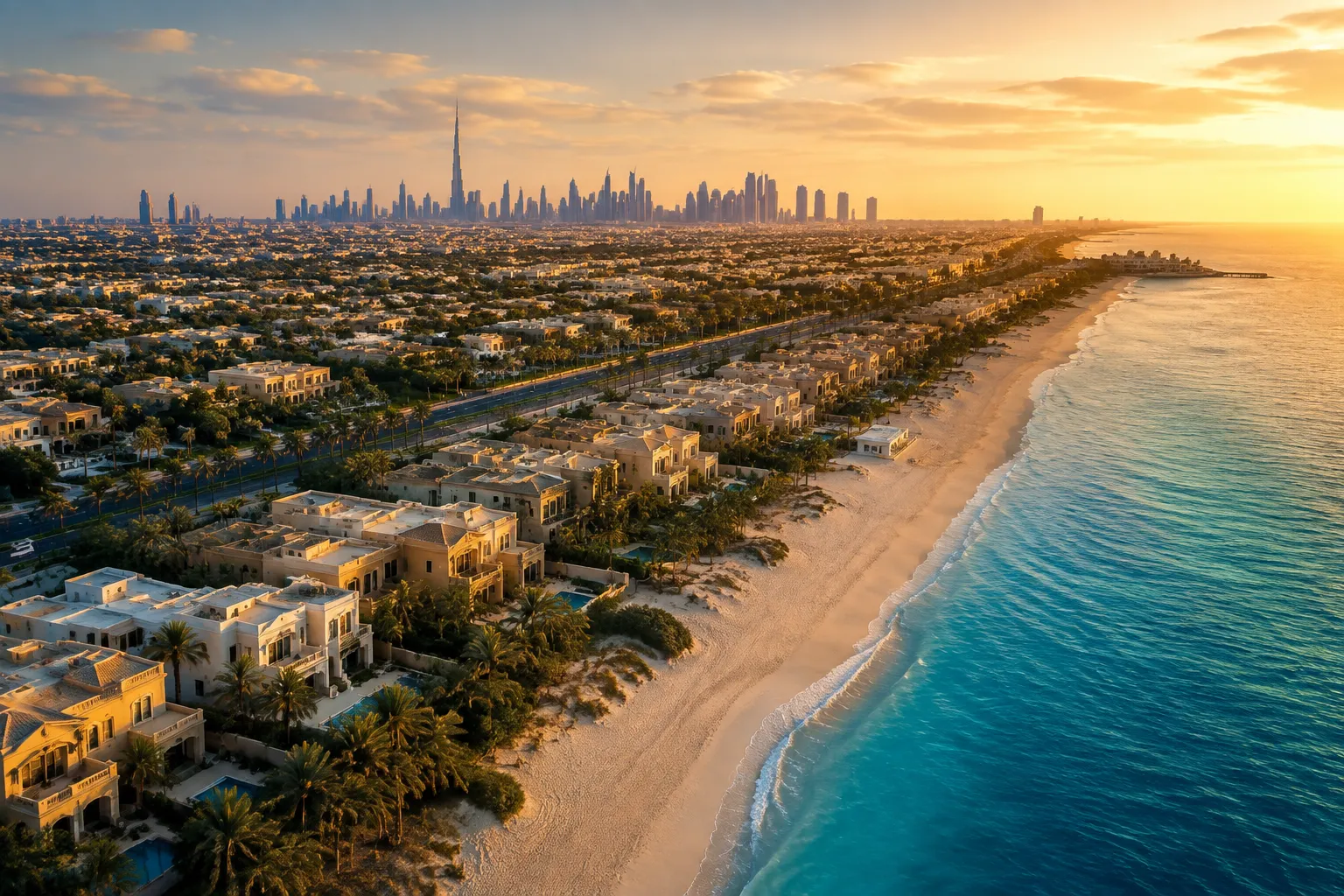
Jumeirah is Dubai’s original coastal residential district — a stretch of low-rise, villa-lined streets running roughly 12 kilometres along Jumeirah Beach Road, from Al Satwa in the north down to Umm Suqeim in the south. It is not a man-made island. It is not a resort. It is the quieter, greener, more lived-in version of Dubai — the kind of place that photographs well from the air and then turns out to be more suburban in person.
Most guides miss the single most important fact: mainland Jumeirah 1, 2, and 3 are leasehold for non-GCC nationals — not freehold. That is not a hidden clause or a scam. It is Dubai’s designated-zone law working exactly as written. If you are shopping for a villa in Jumeirah as an expat, it pays to know this before you fall in love with the floor plan, not after.
This guide covers the three sub-districts, the beaches, the ownership question, the real investment numbers, and how Jumeirah stacks up against Palm Jumeirah — so you can decide whether it’s the right move for your family, your money, or your next holiday.
What Exactly Is Jumeirah?
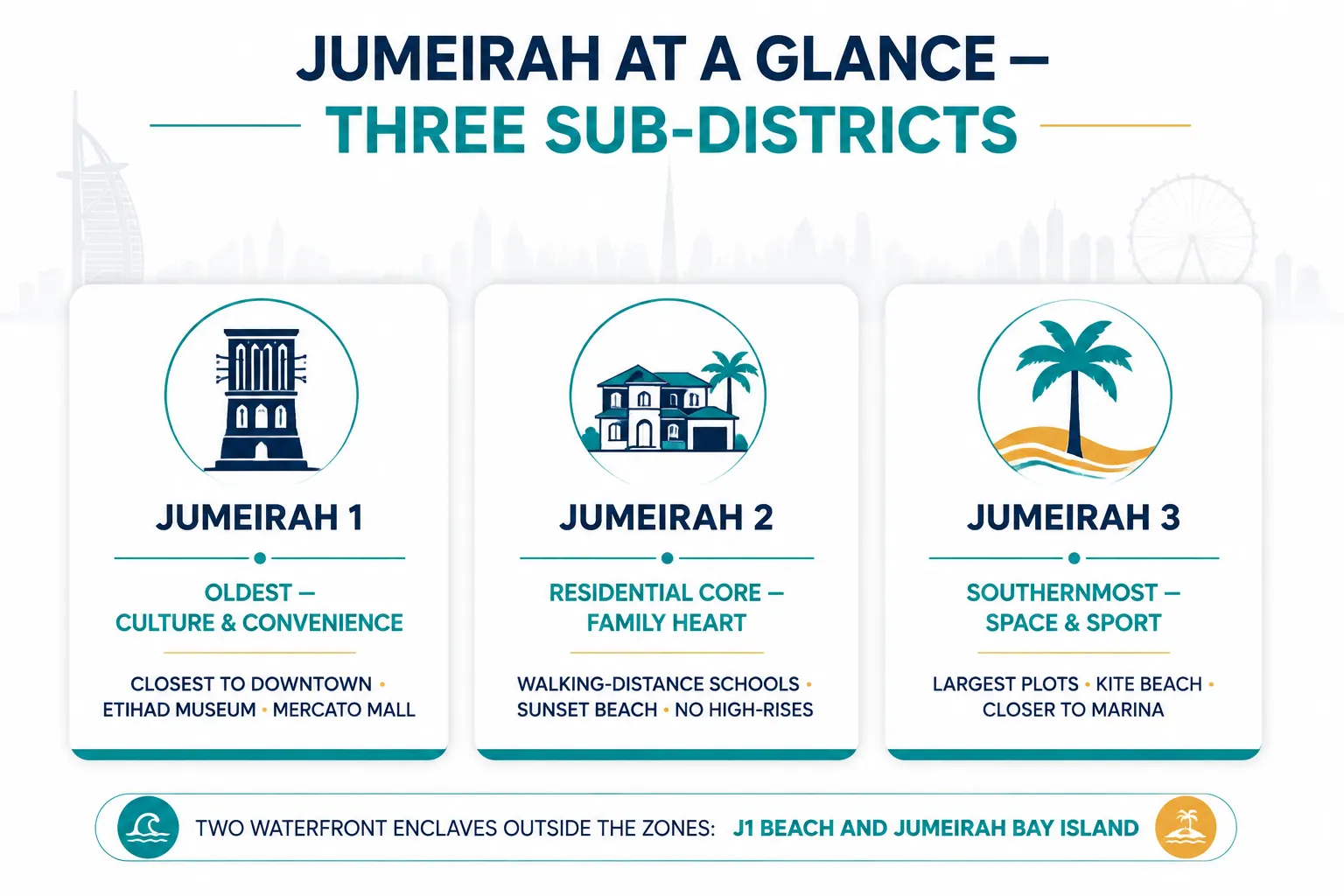
Jumeirah is a coastal district on Dubai’s mainland, divided into three numbered sub-communities:
- Jumeirah 1 — the oldest section, closest to the city centre.
- Jumeirah 2 — the quiet, established residential core.
- Jumeirah 3 — the southernmost section, with the largest plots and nearest to Kite Beach.
Two waterfront enclaves sit outside the numbered zones: J1 Beach (formerly La Mer) and Jumeirah Bay Island — host to the Bulgari Resort.
Annual villa rents typically fall between AED 200,000 and AED 800,000, depending on plot size, renovation quality, and sub-district. Short version: Jumeirah is for families who want a real neighbourhood, investors who understand leasehold, and visitors who want free, open-access beaches.
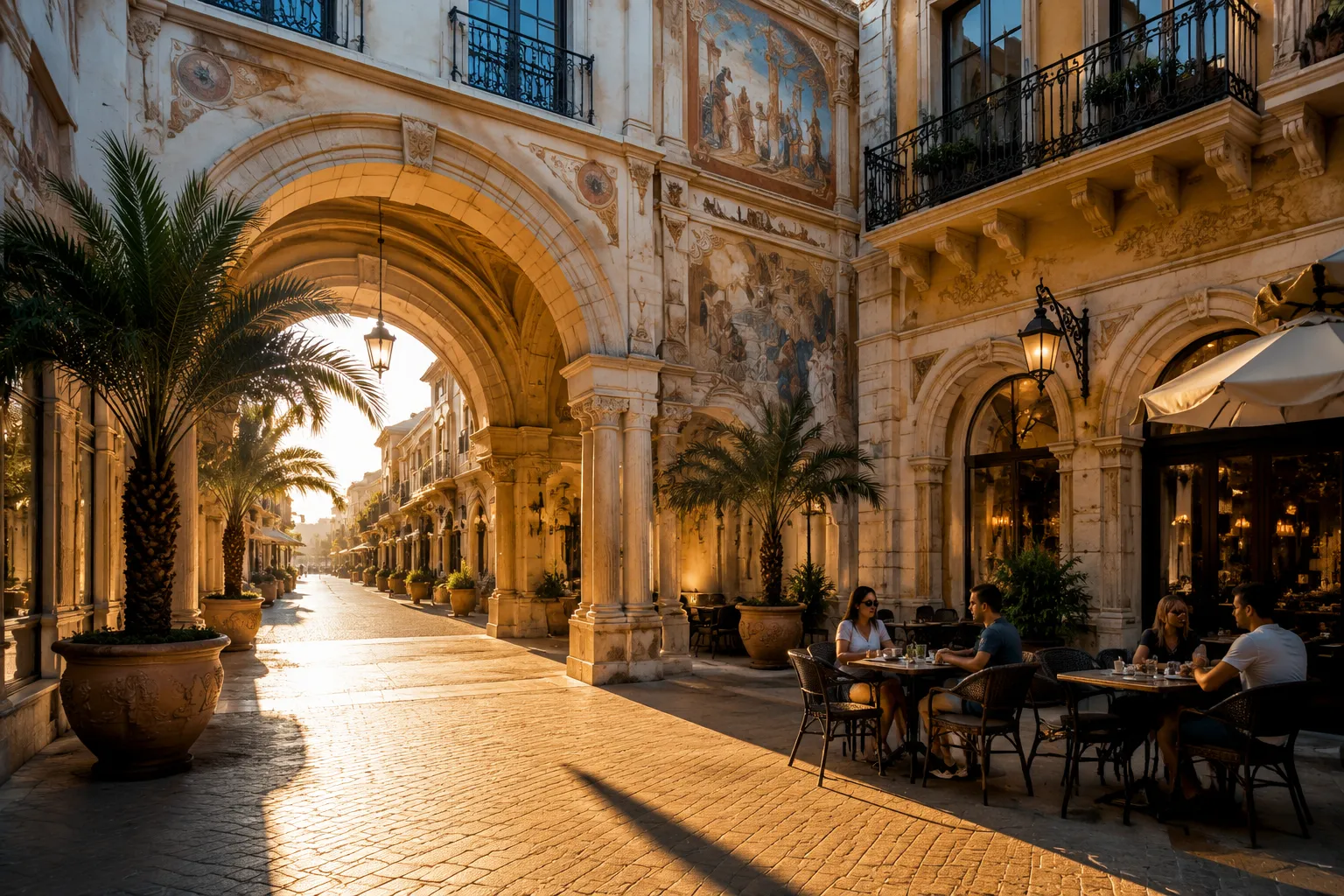
Jumeirah 1: Culture and Convenience
Jumeirah 1 is the oldest and most urban part of the district. You will find the renovated Etihad Museum, Mercato Mall, and some of Dubai’s earliest villa stock here.
- Everyday lifestyle activity — coffee shops, groceries, small retail along the main roads.
- Best commuter location: about 10–15 minutes to Downtown, DIFC, and Business Bay.
The streets between Beach Road and the shoreline remain surprisingly quiet. If you value heritage, accessibility, and Dubai’s historic side — museums, Al Fahidi, the Creek — this is the section to pick.
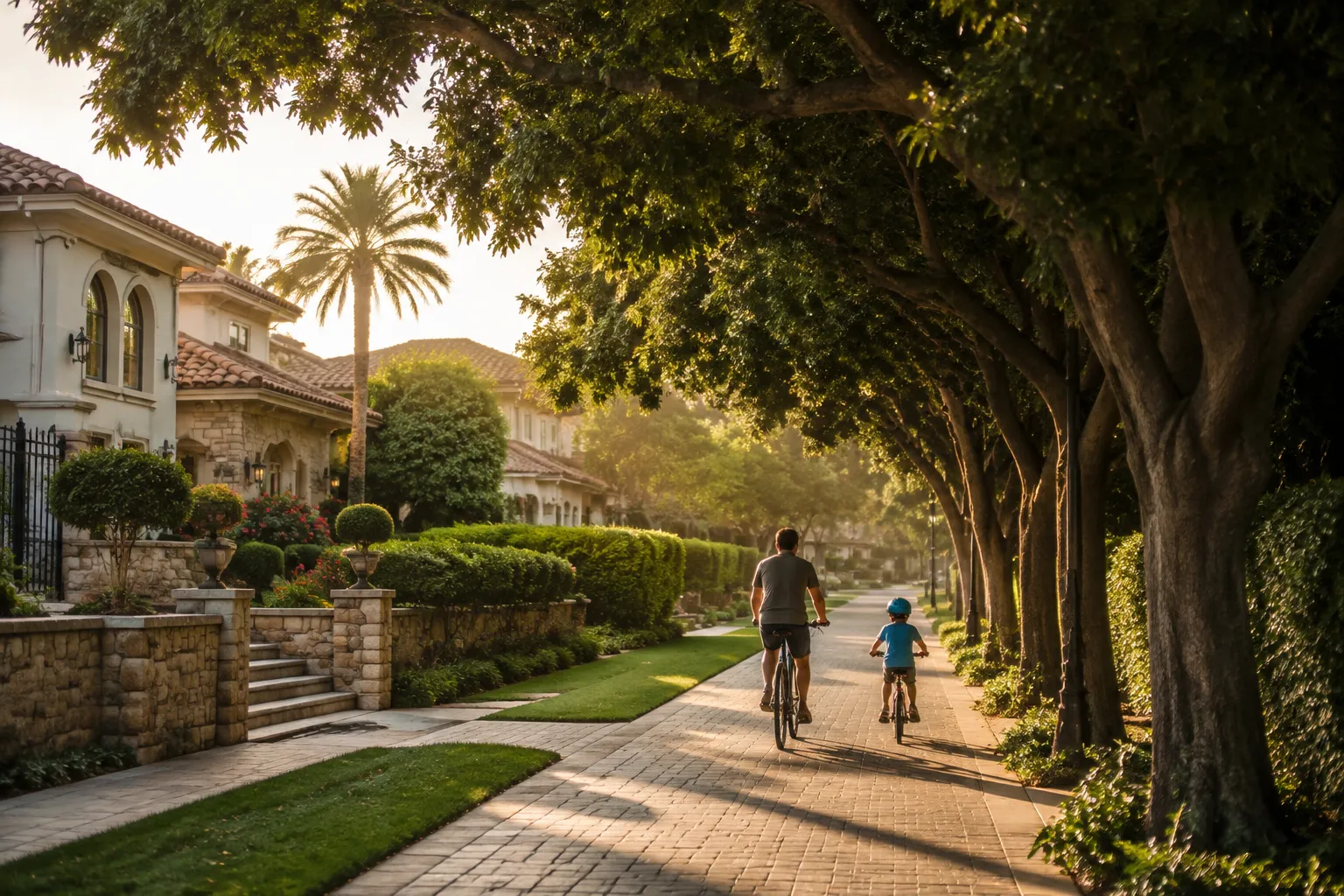
Jumeirah 2: The Residential Core
This is the heart of family Jumeirah — and, in most locals’ opinion, its best part. Mature trees, wide pavements, established villas backed by decades of the same families returning home.
What makes Jumeirah 2 different
- Schools within walking distance. Dubai English Speaking School (DESS), JESS, and several nurseries sit inside or right beside the district. Many families skip the school-run car entirely.
- Larger plots than Jumeirah 1, smaller than Jumeirah 3.
Sunset Beach sits on its coastal edge — a genuinely local, residential beach with family picnics and volleyball, and none of the weekend festival crowds. No high-rises, no gated mega-developments. Step off Beach Road and you are in quiet suburban Dubai.
If you want stability, roots, and a place where neighbours know each other, this is where you look.
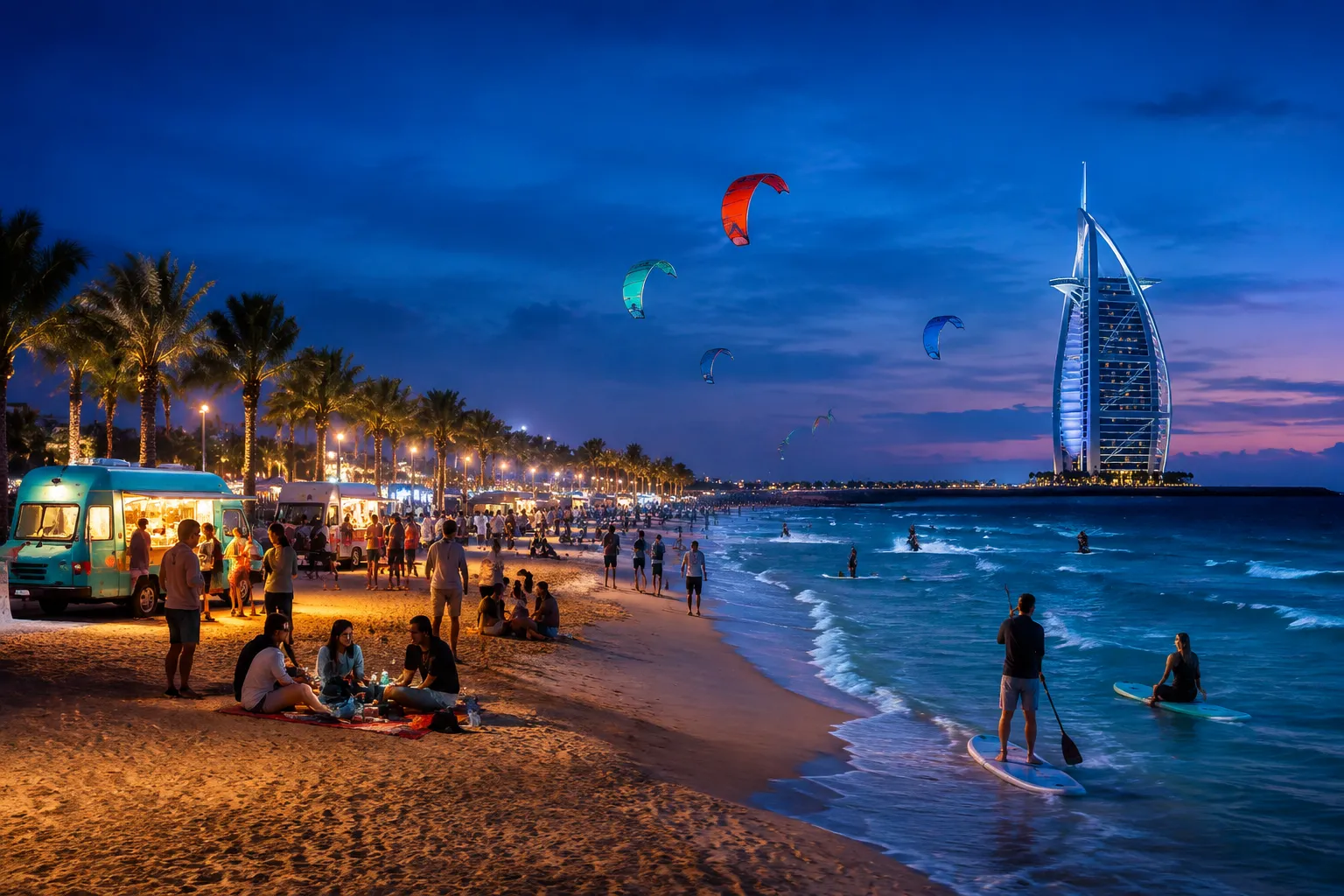
Jumeirah 3: Space, Sport & the Beach Lifestyle
Jumeirah 3 is the southernmost section, stretching toward Al Sufouh. It holds some of the largest villa plots in all of mainland Dubai — with individual properties exceeding 10,000 square feet.
Its main draw is Kite Beach — Dubai’s go-to public beach for paddleboarding, kite surfing, food trucks, and weekend crowds. It’s free, open 24 hours, and lifeguarded during daylight hours.
The personality here is a little younger and more transient than Jumeirah 2 — more expat professionals, more recent arrivals. Property stock is a mix of original builds and high-end renovations, with the premium beachfront streets commanding the district’s highest rents.
Commute trade-offs: about 15–20 minutes to Downtown, but closer to Dubai Marina, JBR, and Media City — making it a strong middle ground for people who work along the western corridor. If you’re weighing that trade-off against Jumeirah’s other end, see how it stacks up against Al Sufouh in our local guide to Al Sufouh Beach, Jumeirah 3’s quieter southern neighbour.
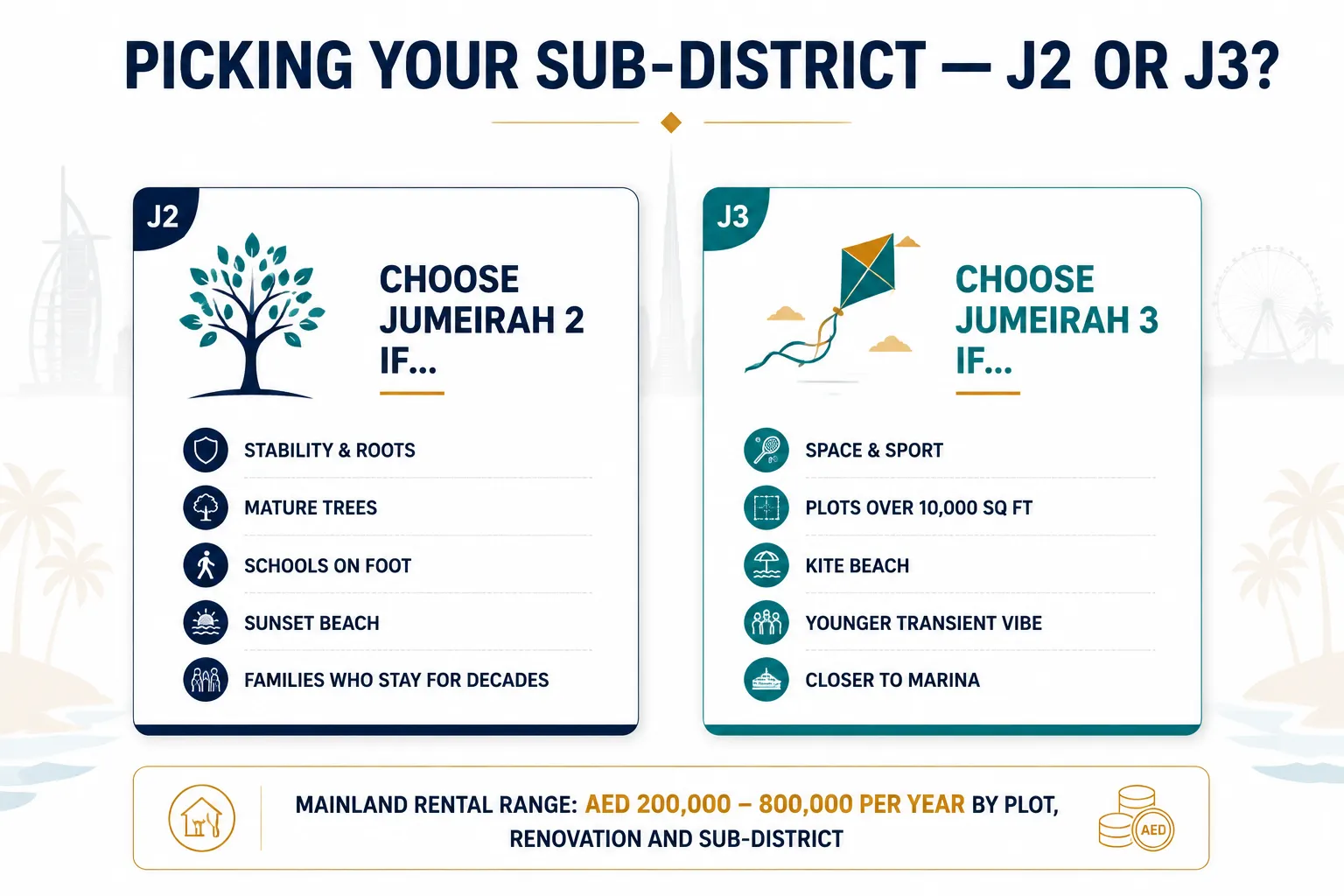
Jumeirah 2 vs Jumeirah 3, in one line: J2 is roots and school runs; J3 is space, sport, and a younger crowd closer to the beach.
J1 Beach (Formerly La Mer): The New Luxury Waterfront
If you search for “La Mer” expecting a casual, family-friendly Dubai beach, you are reading out-of-date material. J1 Beach has replaced it with premium beach clubs, fine dining, and curated retail. The distinguishing feature for visitors: J1 Beach is not a free public beach. Much of it is operated by high-end venues with entry fees, minimum spends, or reservations.
For a traveller on a budget, treat it as an experience, not an everyday beach. For everyone else, it is one of Dubai’s most polished coastal destinations.
Jumeirah Bay Island: The Ultra-Prime Enclave
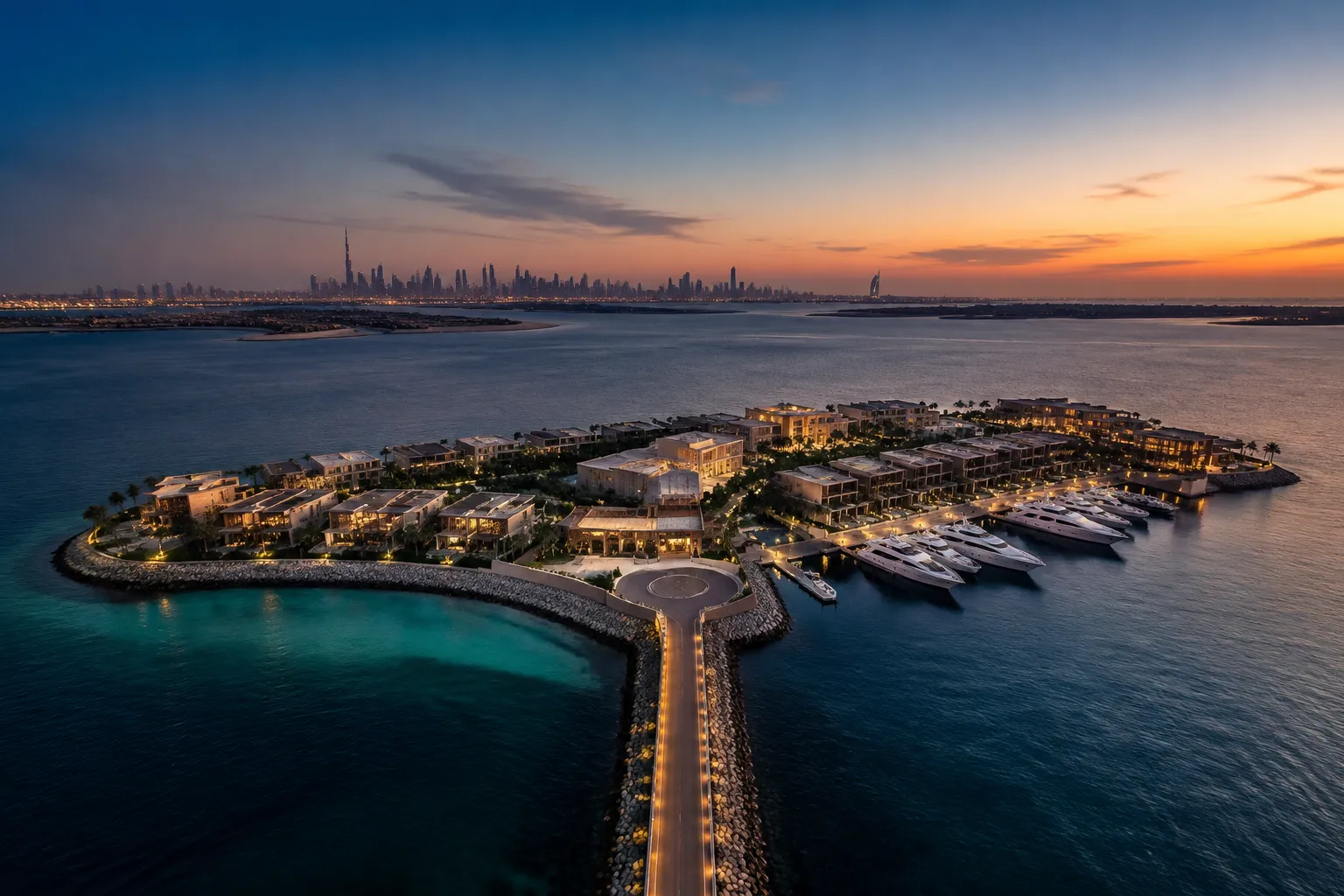
Jumeirah Bay Island is reached by a single bridge and is home to a small number of ultra-luxury villas plus the Bulgari Resort. It is fully freehold, security-gated, and priced far above mainland Jumeirah.
Potential buyers here are generally comparing it to Palm Jumeirah or Emirates Hills — not to Jumeirah 2 villas. It is a different market entirely.
The Ownership Question: Leasehold vs. Freehold
This is the single most important fact in any 2026 Jumeirah guide, and it is rarely stated this clearly:
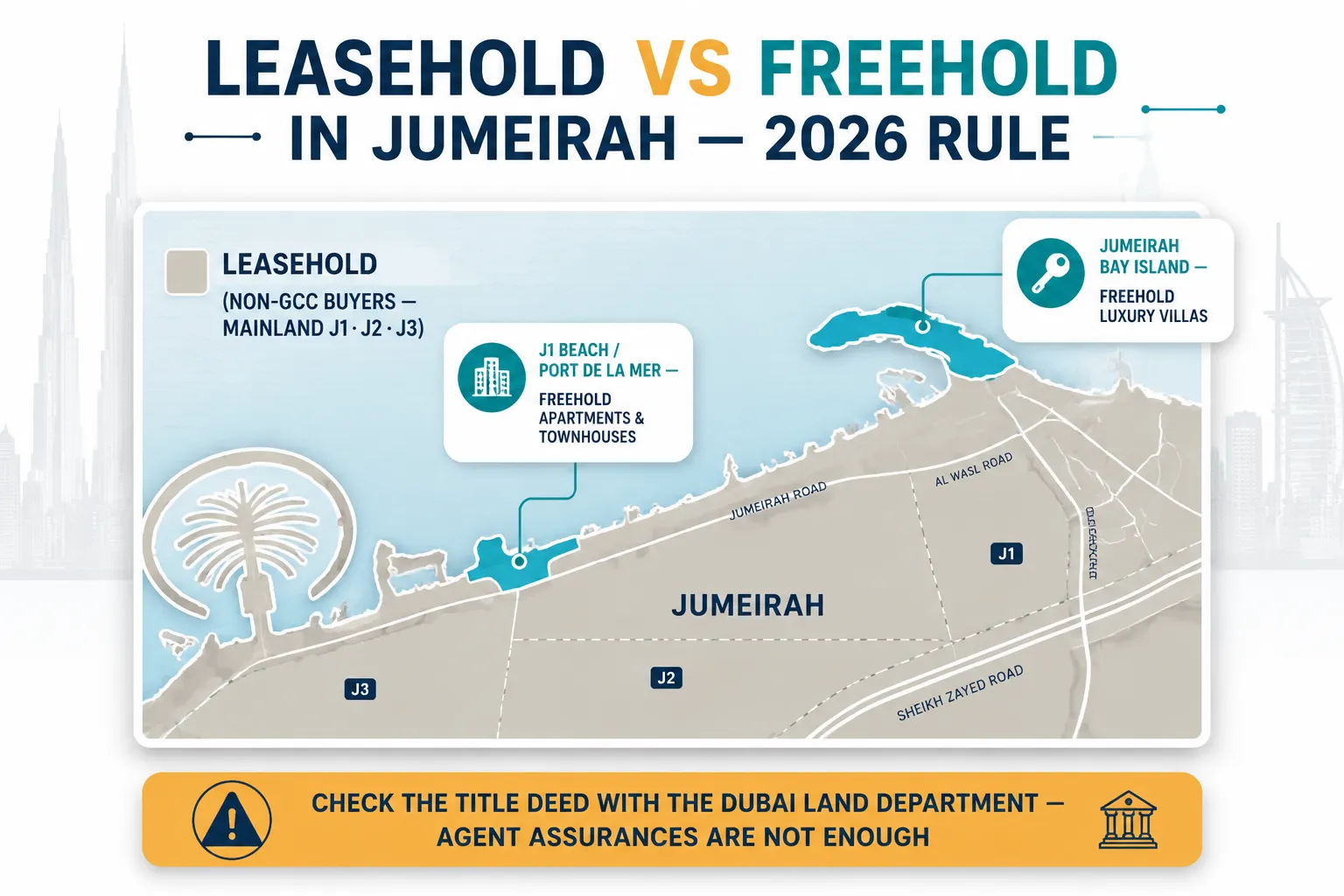
Mainland Jumeirah 1, 2, and 3 are leasehold for non-GCC nationals. Expatriates from Europe, Asia, the Americas, or anywhere outside the GCC cannot take freehold title to a villa here. You can hold a renewable long-term lease — typically registered through the Dubai Land Department (DLD) — but the land itself is not yours.
Freehold ownership in the Jumeirah area is limited to two designated zones:
- J1 Beach / Port de La Mer — freehold apartments and townhouses within the gated waterfront.
- Jumeirah Bay Island — freehold luxury villas.
Why the leasehold status matters
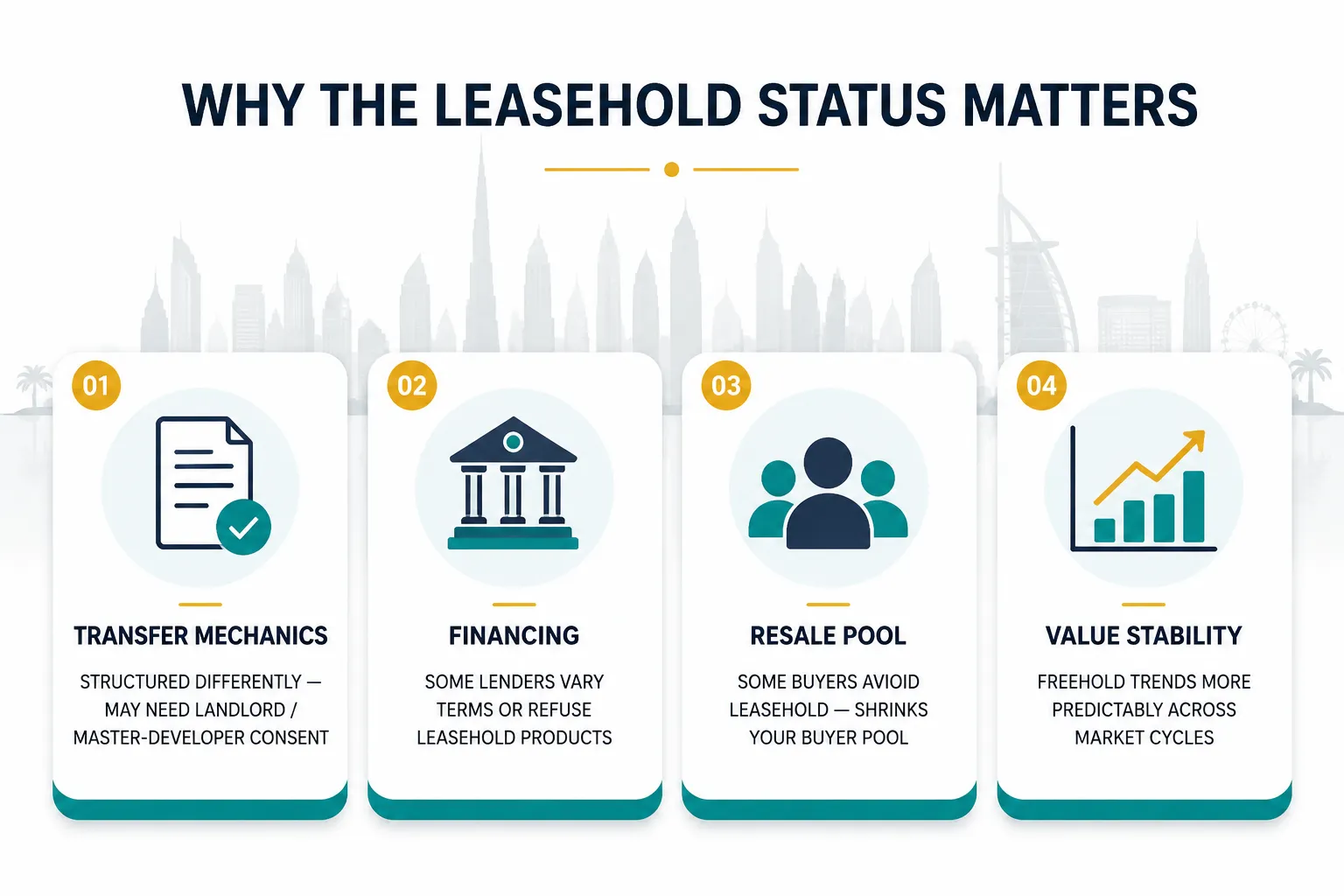
- Transfer mechanics. Leasehold sales are structured differently and may require landlord or master-developer consent.
- Financing. Some lenders apply different terms — or refuse certain products — for a leasehold property.
- Resale pool. Some buyers deliberately avoid leasehold properties, which shrinks your buyer pool when you eventually sell.
- Value stability. Freehold assets generally behave more predictably across Dubai’s property cycles.
Before you commit, check the designation with the Dubai Land Department or review the title deed history. Agent assurances alone are not enough.
What Property Yields Can You Actually Expect in Jumeirah?
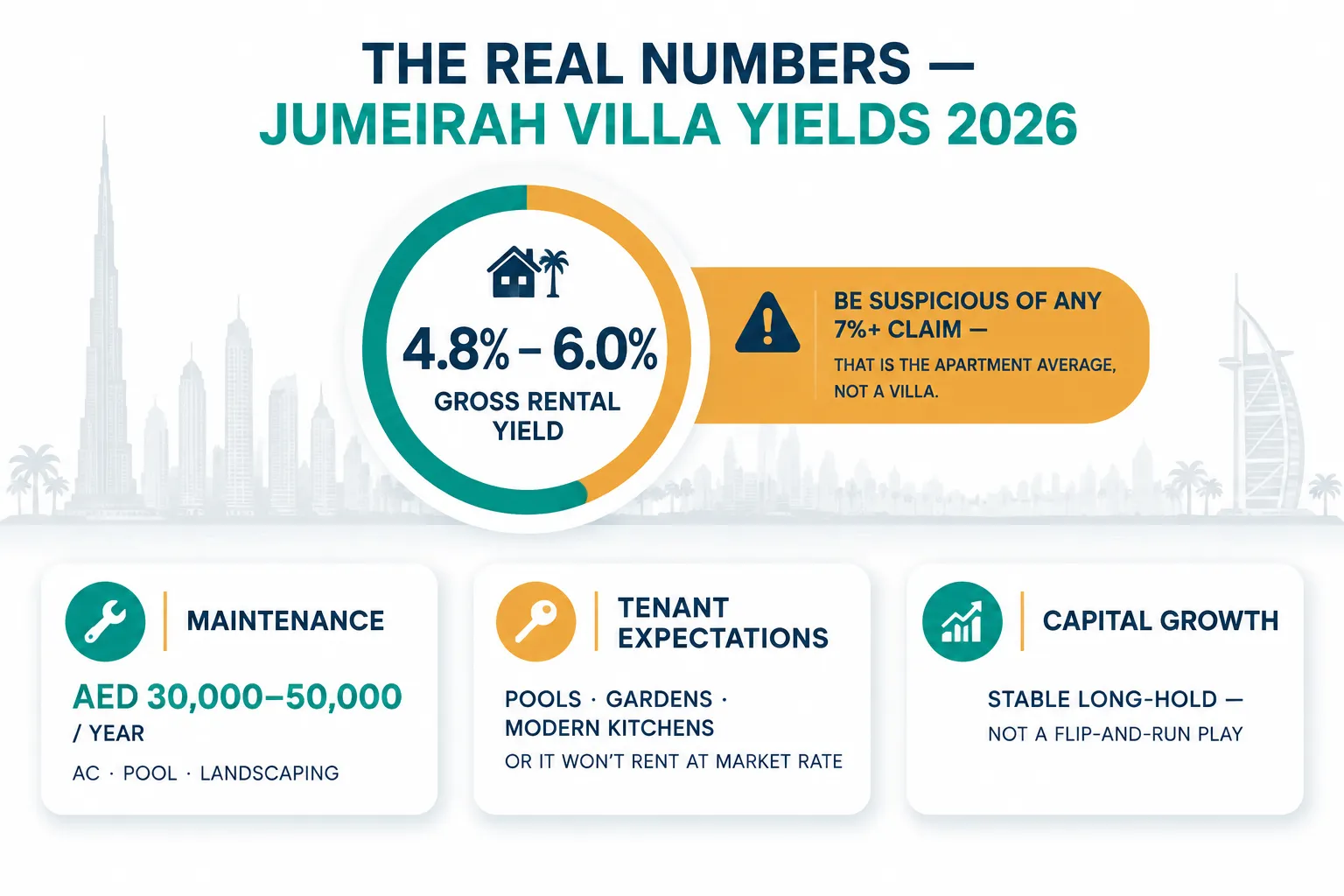
For 2026, gross rental yields on Jumeirah villas sit between 4.8% and 6%.
Be suspicious of any headline claiming 7% or more for a Jumeirah villa. Those figures usually borrow from Dubai’s apartment market average, which runs higher because of smaller unit values and shorter tenancy cycles. Applying an apartment average to a large villa produces a flattering but unrealistic number.
Beyond the headline yield, model these real costs
- Maintenance. Older Jumeirah 2 villas routinely need AED 30,000–50,000 per year for AC replacement, pool servicing, landscaping, and structural repairs. A villa bought without a reserve fund can easily wipe out a full year of rental income.
- Tenant expectations. Family tenants expect functioning pools, manicured gardens, modern kitchens. A tired interior will not rent at market rate — no matter how good the postcode is.
- Capital growth. Jumeirah is a mature district. It has historically delivered stability and steady demand rather than speculative spikes. That makes it a strong long-hold investment — but it is not a flip-and-run appreciation play.
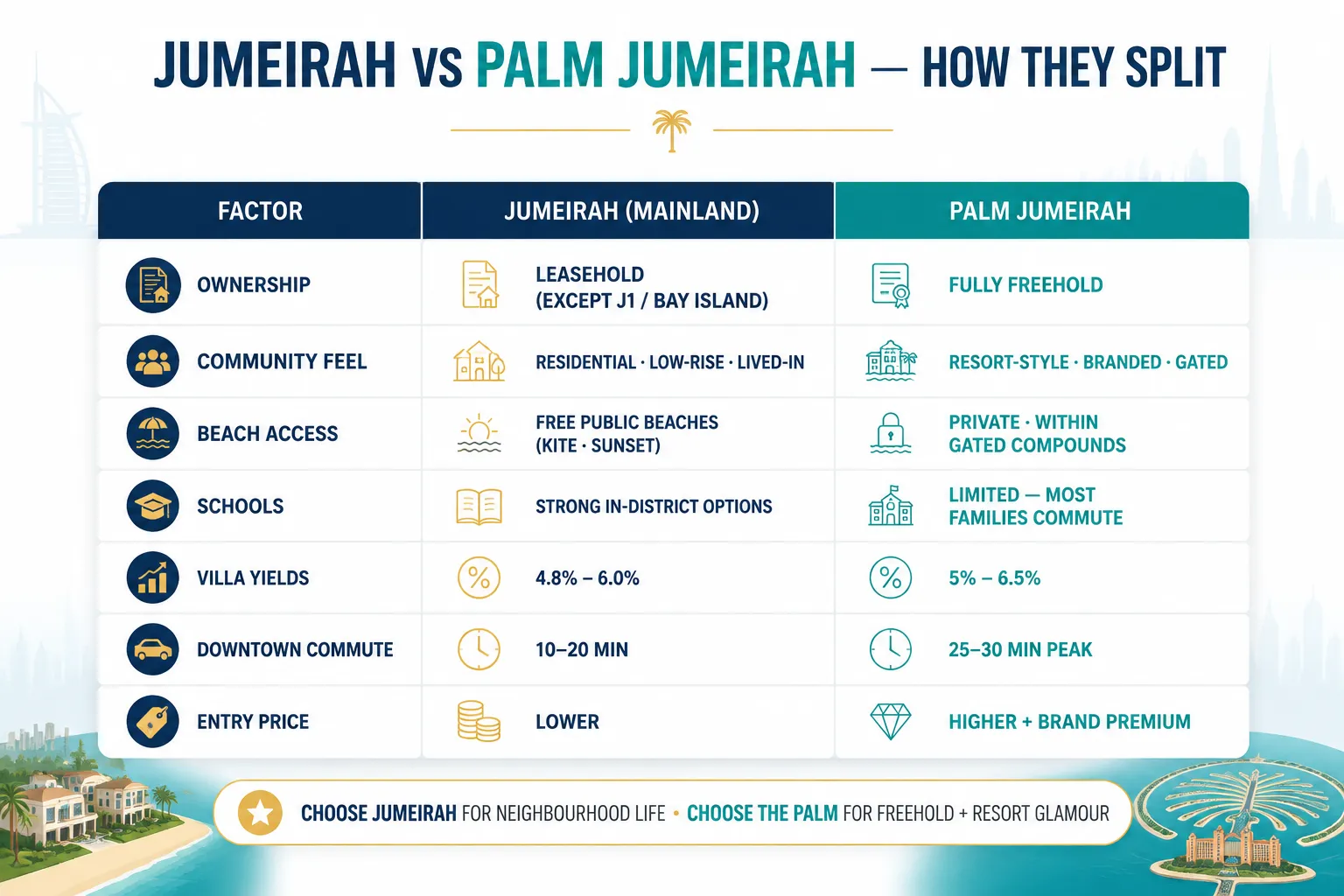
Jumeirah vs. Palm Jumeirah: How to Decide
Nearly everyone shortlists the Palm alongside Jumeirah. Here is how the two actually separate:
| Factor | Jumeirah (Mainland) | Palm Jumeirah |
|---|---|---|
| Ownership | Leasehold (except J1 Beach, Bay Island) | Fully freehold |
| Community feel | Residential, low-rise, lived-in | Resort-style, branded, gated |
| Beach access | Free public beaches (Kite, Sunset) | Private, typically within gated compounds |
| Schools | Strong options inside the district | Limited on-island; most families commute to mainland schools |
| Villa yields | 4.8%–6% | 5%–6.5% |
| Downtown commute | 10–20 minutes | 25–30 minutes in peak |
Choose Jumeirah if you value genuine neighbourhood life, school walkability, free public beaches, and a lower entry cost — and you can accept the leasehold structure.
Choose the Palm if you need freehold title, private beach access, resort amenities, and a more glamorous buyer profile — and your budget comfortably absorbs the premium.
Getting Around Jumeirah
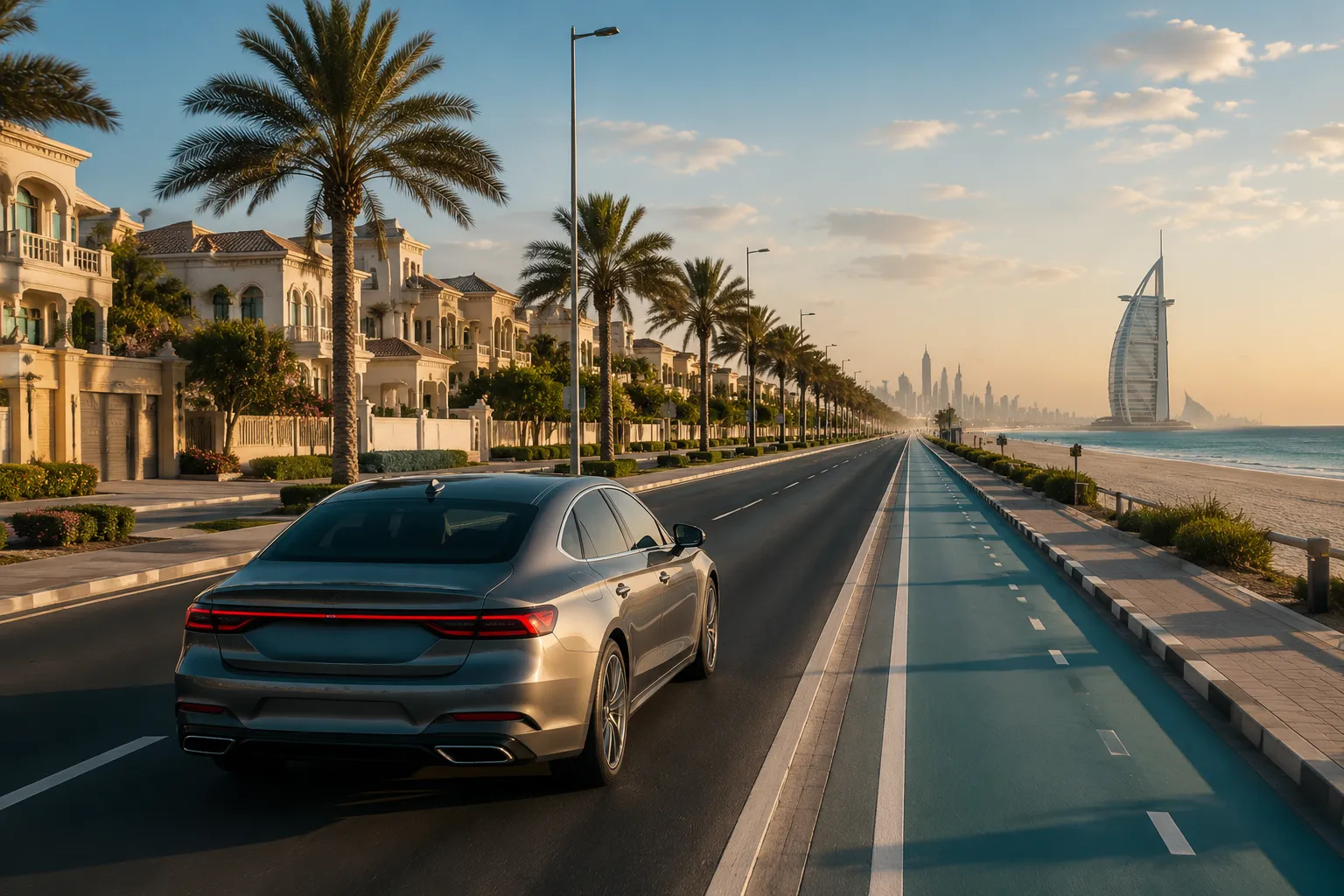
Jumeirah is not Metro-served. Residents drive, cycle, or use ride-hailing. Long arterial roads keep traffic predictable, and the beach road alignment means most commutes hug the coast before turning inland.
There are advantages worth noting: parking is easier than almost anywhere else in coastal Dubai, and cycling has become the default form of exercise — flat, shaded, and street-friendly.
If you’re relocating rather than just visiting, a car is the practical starting point while you sort out a residents’ permit or wait for your own vehicle to arrive — our guide to monthly car rental in Jumeirah breaks down how the pricing and mileage terms work for a longer stay. If it’s just a visit, book a rental car in Jumeirah with free delivery to most addresses along Beach Road.
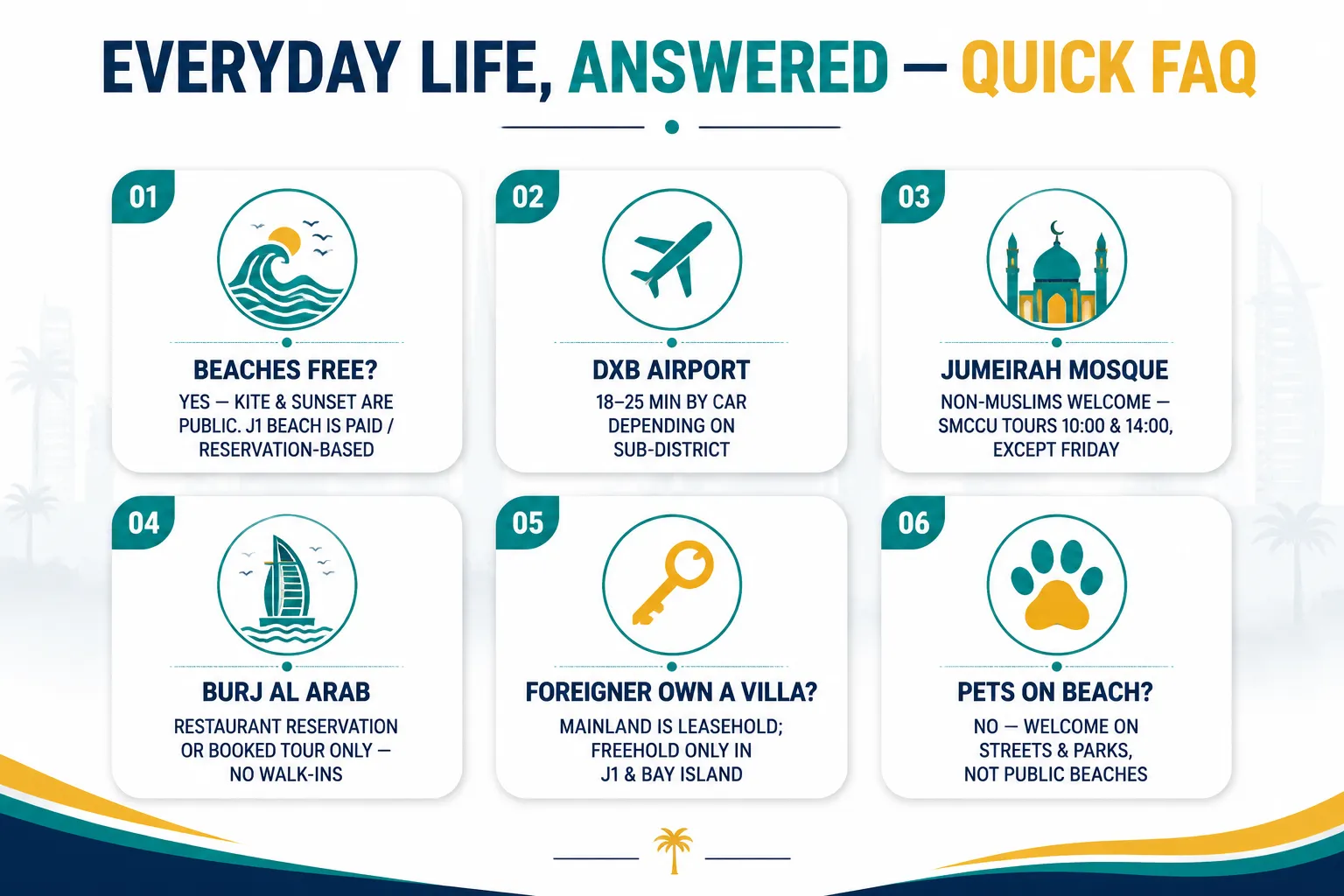
Everyday Life, Answered
Are Jumeirah’s beaches free?
Yes — Kite Beach and Sunset Beach are free public beaches. J1 Beach is a commercial venue with paid or reservation-based access.
Is Jumeirah a city or a neighbourhood?
It is a coastal residential district of Dubai — not a separate city, and not an island.
How far is Jumeirah from DXB Airport?
Roughly 18–25 minutes by car, depending on traffic and which sub-district you’re heading to.
Can non-Muslims visit Jumeirah Mosque?
Yes. The Sheikh Mohammed Centre for Cultural Understanding (SMCCU) runs daily tours at 10:00 and 14:00, except Fridays.
Can non-guests visit the Burj Al Arab?
Only with a restaurant reservation or a booked tour. Walk-ins are not permitted. See our complete guide to visiting the Burj Al Arab for booking routes that actually work.
Can a foreigner own a villa in Jumeirah?
Mainland Jumeirah is leasehold for non-GCC nationals. Freehold is available only in the designated enclaves — J1 Beach (Port de La Mer) and Jumeirah Bay Island.
Are pets allowed on Jumeirah beaches?
No. Pets are welcome on the streets and in many parks, but not on public beaches.
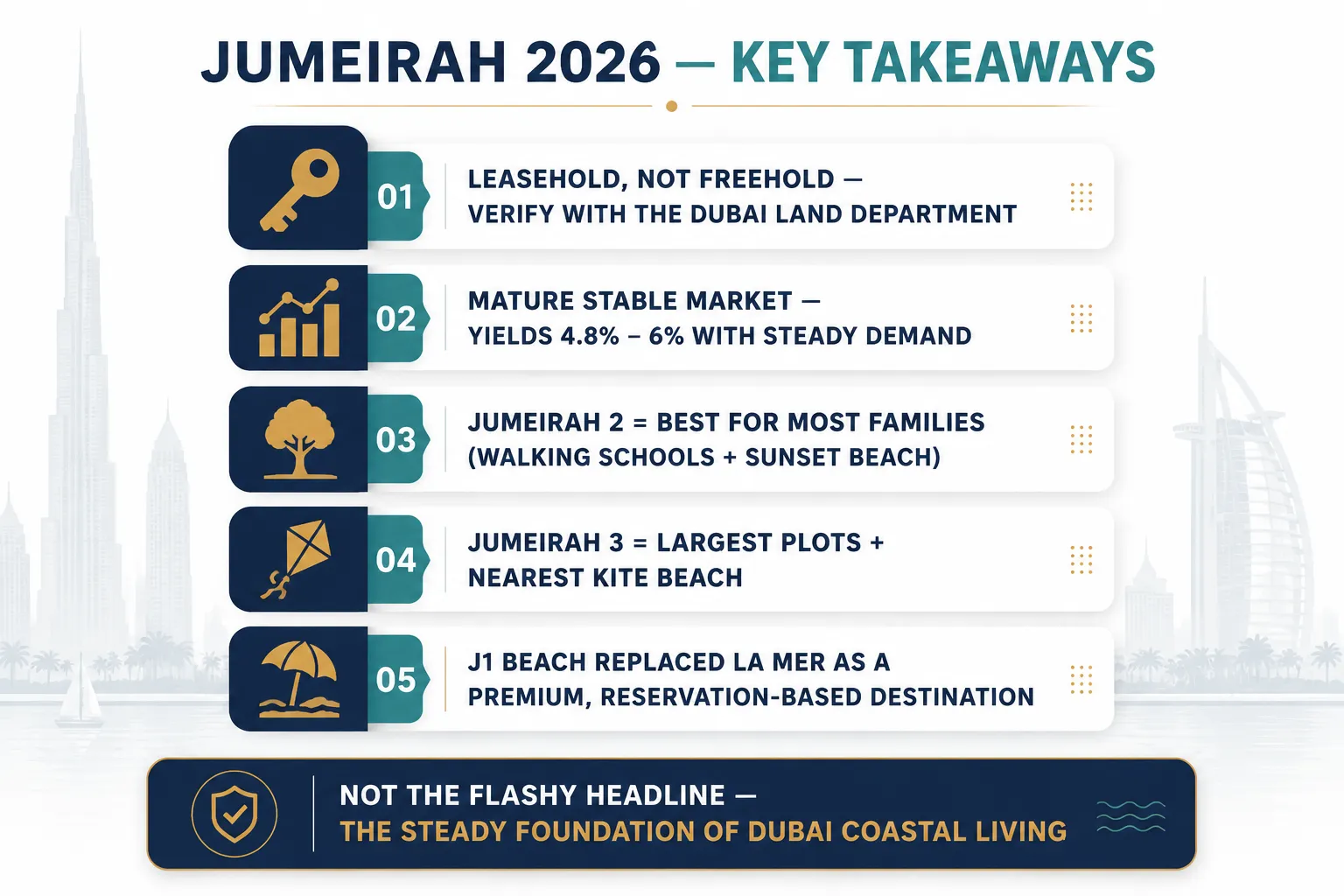
Key Takeaways
- Jumeirah is leasehold, not freehold, for non-GCC buyers — check with the Dubai Land Department before you commit.
- It is a mature, stable market — villa yields run 4.8% to 6%, with steady demand rather than dramatic spikes.
- Jumeirah 2 is the best fit for most families, thanks to walking-distance schools and Sunset Beach.
- Jumeirah 3 offers the largest plots and nearest access to Kite Beach.
- J1 Beach has replaced La Mer as a premium, largely reservation-based destination — not a free public beach.
Final word
Jumeirah in 2026 is not the flashy headline of Dubai’s property market. It is the steady foundation — original coastal living, mature gardens, respected schools, and open beaches that still belong to the public. Its weakness — the leasehold rule — is also its silver lining: fewer speculative buyers, saner prices, and yields that actually hold. For families who want roots and a genuinely beachside address, few districts in Dubai deliver the same package. Jumeirah isn’t an island — and that is exactly its point. If you’re settling in for the long term rather than just visiting, our guide to living in Jumeirah covers the day-to-day side of the move.
Viewing villas or just settling in? Get moving in Jumeirah.
With no Metro line through the district, a car is the fastest way to compare Jumeirah 1, 2 and 3 in a single afternoon — or to get around while your own car is on order. Free delivery to most Jumeirah addresses, daily or monthly.
Sources and methodology
Ownership designations follow the Dubai Land Department’s (DLD) freehold and leasehold zone registry. Golden Visa and residency-linked investment rules are referenced to the UAE’s Federal Authority for Identity, Citizenship, Customs and Ports Security (ICP). Jumeirah Mosque tour timings are referenced to the Sheikh Mohammed Centre for Cultural Understanding (SMCCU). Rent and yield ranges are editorial estimates based on prevailing market listings, not a live valuation.
- Dubai Land Department (DLD) — title registration and freehold zones
- ICP — UAE Golden Visa and residency rules
- Jumeirah Mosque / SMCCU — visitor tour schedule
Editorial disclaimer: this guide is for general information only. Ownership designations, DLD and title-deed details, rents and yields, venue access rules, beach conditions, timings, traffic conditions, and regulatory requirements may change and should be independently verified with the relevant authorities, the DLD, property management, or licensed professionals before acting on any decision.